Wednesday, June 17, 2009

Muscle Fibers and Pennation Angles (Fun!!!)

I think its important for trainers to know and understand functional anatomy. Would you hire a mechanic who couldn't tell the difference between a carburetor from a brake pedal? It amazes me that trainers still use body part splits and design their workouts around isolation movements like biceps curls or abdominal crunches. The body works in movements and should be trained that way. Check out this post I wrote back in April concerning the efficacy of some of the most popular machines at commercial gyms. I'm not saying that there isn't a time and a place for machines and isolation movements, but to base your entire workout on these overrated exercises are both inefficient and ineffective.

The"core". I've bashed conventional core training in my previous posts, but I'll go into further detail today. Core training has been somehow bastardized into abdominal training. The core is a lot more complicated than trunk flexion - you simply cannot it by performing sit ups and crunches!

There are superficial muscles like the rectus abdominus and external obliques, but there are also deeper muscles such as the transverse abdominus and internal obliques - this is just the anterior portion of your midsection. The posterior portion includes another host of superficial and intrinsic muscles that include your spinal erectors and multifidi. Now, in my opinion, the "core" is not just your midsection. I'd say its your entire torso all the way down to your hips, which means we need to include the latissimus dorsi, the glutes, and hip flexors just to name a few.

"You have your ubulus muscle, which connects to your upper dorsimus"

All those different muscles can't be there to just produce trunk flexion. It isn't a functional way to train them, and your other lifts like squats, deadlifts, lunges, presses, and rows will be limited by the weakness of your core. We've always trained the core for strength purposes with sit ups and side bends, etc. but is that its true role? Think about a tennis/golf/baseball player swinging their respective equipment - all the movement and power is generated through the use of their hips and thoracic spine (upper back), all the while maintaining a very ridgid midsection. What about a mother carrying a purse around one arm, with groceries in one hand, while carrying her son in the other? You better believe she's keeping her core tight otherwise she'd tip right over!

Now, check the direction of the different muscles fibers in your abdominals in the first picture I posted. Your rectus abdominus fibers are vertical, the transverse is horizontal, and the internal and external obliques run in diagonals - all of which connect to form a tight, interwoven web. Why is denim so durable?

It's crosshatched. What about an architect designing a house/building?

Same concept. Now, if the core was really designed for trunk flexion - I think it would look more like a hamstring:

Note how the muscle fibers essentially run straight up and down.

Continuing with our discussion of the core musculature. Let's take a closer look at the lats:
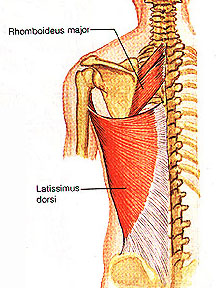
Notice how the muscle fibers run diagonally down from the humerus through the thoracolumbar fascia (the white colored fibers) and insert on to the iliac crest. The problem with traditional lat pulldowns and pullups are that they load your muscles in a vertical fashion. Because your lats run diagonally, they are in both a vertical and a horizontal vector. How do we add that horizontal component? We attempt to pull the bar apart. Obviously, the bar isn't going to allow that, but by performing the exercise in this manner, you engage more muscle fibers that woud've otherwise had an unfavorable line of pull.

The hamstrings are comprised of three different muscles: the semitendinosus, semimembranosus, and the biceps femoris (which actually has a short head, as well as a long head).

What we're concerned about here is the biceps femoris. I mentioned before that the hamstring muscle fibers run, for the most part, straight up and down. This is true, but the biceps femoris (BF) actually tracks slightly to attach on to the lateral portion of your knee. Why is this important? If your BF strength isn't up to par, your adductors will win the tug of war of your knee and your patellofemoral joint will literally "cave in" during running, squatting, lunging, climbing stairs, etc. I used to attribute this solely to gluteus medius weakness, but the glute med. is definitely an overrated muscle in this movement impairment. While the BF attaches directly onto the knee, the glute med. influences the knee via the IT(Iliotibial) Band:

Check out the knees of the girl jumping in this video:

Knees collapsing inwards like that is a recipe for an ACL injury. What exercises can we use to help prevent this? You can try squats with a mini band around your knees. Click here for a video with coaching cues by strength coach Mark Verstegen.
You can also try hamstring curls on a stability ball with your feet externally rotated to emphasize the BF.

Now, like I said before, your muscles work in movement patterns in conjunction with other muscles. You need to exercise your glutes as well, which is why I didn't include any exercises that purely "isolate" the BF.

Speaking of glutes:
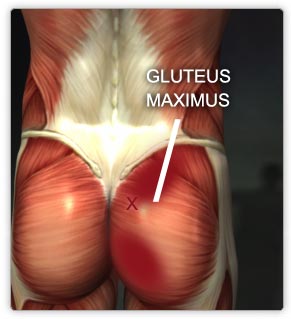
Your glutes primarily thought of as hip extensors (when you stand up from a chair, as you push your hips forward - you are using your glutes). They are also hip external rotators - meaning they let you do this:

Check out the muscle fiber arrangement of the glutes - they run horizontally. Ask any informed fitness enthusiast on how to build great glutes and they'll generally reply with some sort of squat or deadlift variation. Next time you squat/deadlift/lunge/etc., I want you to think about "gripping" the floor with your toes. From there, as your coming back up from the bottom position, think about "spreading the floor" out from underneath you. In other words, try to externally rotate your feet. Just like you wont be able to pull a bar apart during a pullup, you obviously won't be able to break the floor underneath you, but by consciously trying to rotate your feet outwards, you engage more of the muscle fibers in your glutes, which results in a stronger lift.

I hope these tips add some tools to your training arsenal. Make sure your trainer understands their anatomy!

Train Hard...and smart,

Jason

Thursday, June 4, 2009

Perform Better Summit

A couple of weeks ago, I went to a 3-day seminar in Rhode Island. I try to make it a point to go to as many seminars as I can in order to keep up with the latest research, training techniques, and advice from the fitness industry's best and brightest minds. I had an awesome experience and it was definitely the best event I have ever been to. The only part that I didn't like was that there were way too many things going on at once. At any given time, there were four presenters either giving lectures or doing some hands-on work with the attendees. I had to really sit down and contemplate which speaker to attend and which topics would further enhance my knowledge. I decided to go to the lectures almost exclusively, as opposed to the hands-on segments just because I felt like I was there to learn and not necessarily work out. Here are a couple of key recurring themes that resonated throughout the weekend:

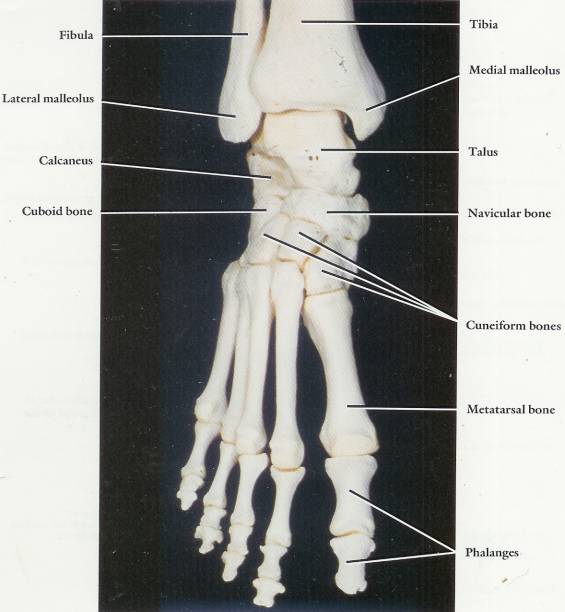
1) To state it simply - the foot is really important. It's got 26 bones; the human body has 206 bones. We've got two feet, which means that 52 bones out of 206 make up the skeletal component of our feet. That's basically a 1/4 of the bones in our body! The presenter, Todd Wright, said jokingly "If the foot wasn't that important, it would just be one big ass bone!" He went on to talk about how our feet and hands are great propioceptors, which means they communicate with the rest of our body about our surroundings. Think about how you can feel your way around a room when it is pitch black - our hands take on the role of our eyes and "tell" our bodies where to go. Our feet have this same tactile ability. However, we lose this ability when we don't train the intrinsic muscles in the feet.

Take a look at your shoes. Do they look like this?

All that cushioning might feel nice, but it does not allow your feet to assume its role as a propioceptor. I saw numerous people at the conference wearing these:

These seem a tad bit excessive and might garner some outlandish looks - I would just recommend training your lower body (weight training, not aerobic exercise) with either bare feet, or with shoes like Nike Frees:


Having strong feet can go a long way in protecting the ankles, knees, and hips - all while improving balance and proprioception.

2) The lats are really important. Take a look at how much surface area the latissimus dorsi cover:

It's origins consist of the sacrum, iliac crest, T7-T12 vertebrae, inferior angle of the scapula, and the thoracolumbar fascia. It also inserts on to the humerus directly. The "core" is usually referred to as the abdominal/low back region, but the lats are often overlooked as a key core stabilizer. Train this important muscle and make sure it is activated in all of your lifts.

3) Breathing. Are you a chest breather, or a belly breather? When you inhale, your stomach should rise, and not your shoulders. Our society is very upper-trap dominant. Desk jockeys, students, computer engineers all have a great deal of tension in their upper traps. Everytime you breathe with your chest, your shoulders rise and your upper traps fire. You breathe thousands of times a day - you can imagine how much tension you can build up. Try this exercise called crocodile breathing to help you to breathe using your diaphragm:

Lay face down and push your stomach into the floor and you inhale, and then relax as you exhale. Having too much tension in your upper traps can lead to shoulder, neck, and upper back pain.

4) The fascial sytem. If you can't stand up and reach your toes with your hands, then try this out. Grab a tennis ball and roll the bottom of your feet with it - you are most likely going to feel a quite a bit of discomfort. Find those "hot spots" and really try to dig in. Roll for about a minute per side making sure you cover the entire foot. Try to touch your toes again. Most people will notice a drastic difference in how far down they go. Fascia is what surrounds your muscle tissue - if your muscles are the train stations of the body, your fascia makes up the train tracks. The superficial back line is a line of fascia that connects the bottom of your feet all the way up your calves, hamstrings, back, and actually ends at the top of your forehead.

By manipulating the origin of the back line with the tennis ball on the feet, you get a systematic release and everything seems to "let go". So the tension in your calves, hamstrings, and lower back reduces and allows you to go further down in a toe-touch. Interestingly, a person who has plantar fasciitis (inflammation of the foot) often has headaches. The pain literally radiates up the line of fascia to the top of their forehead. I'll post more about the fascial system in the next couple of days, but do yourself a favor and start foam rolling!

Train Hard,

Jason

Wednesday, May 27, 2009

Pushups

Quick post today, guys!

Pushups are an awesome exercise. When done correctly, you get a lot of bang-for-your-buck in one seemingly simple movement. At first glance, the push-up works the pectorals (chest), deltoids (shoulders), and triceps. But it also requires a great deal of activation in both your anterior and posterior aspects of your "core", as well as strengthening the scapular stabilizers and rotator cuff. Here's a clip of strength coach Eric Cressey showing proper technique:


At the bottom portion of the lift, you should think about bring your shoulder blades together and down (don't shrug). At the top, think about pushing yourself as far away from the floor as possible and spreading your shoulder blades at the top. This is one of the big differences from the push-up and the bench press. In the bench press, your shoulder blades should be locked together and depressed throughout the entire lift. By pushing your shoulder blades apart in a push-up, you activate and strengthen a muscle called the Serratus Anterior - an often neglected muscle that is crucial for long-term shoulder health. Thus, it is extremely important to make sure you include push-ups into your programs.
The elbows are tucked to about a 45 degree angle from you the sides of your body, and make sure your body is rigid (glutes tight, abs tight, knees locked out).

Push-ups from the floor can be made easier by pushing yourself away on an elevated surface (bed, chair, bench, smith machine). They can also be made harder (elevating your feet, placing your hands on unstable objects, or a one-arm push-up). The same rules apply to all variations, though.

Train Hard,

Jason

Tuesday, May 19, 2009

Fitting Square Pegs Into Round Holes


I hate cookie-cutter programs you find in magazines or on websites. Everyone is different - different needs, goals, posture, strength, training experience, injury history, etc. the list goes on an on. I used to think if an exercise was good, it would be good for everyone. I used to take a random exercise from Men's/Women's Health Magazine and throw it into a client's program. I used to think if a client's back was hurting, they needed to strengthen it. I expect I'll come up with a lot more "I used to..." statements in the future, but I like to think that means that I'm progressing as a trainer. The first time I realized that I didn't know everything was when my clients start achieving better results. Oscar Wilde's quote "I am not young enough to know everything" really hit home for me. Without furder ado, here are 5 mistakes I've made in the
past:

1) Overhead pressing on an overly kyphotic thoracic spine: I've mentioned this in the past, but I'll go over it again. Push your shoulders forward and poke your chin out in front of you. From there try to raise your arms overhead. You will not be able to get your arms directly overhead. In a person with good posture and optimal mobility in their thoracic spine, the scapula will have enough room to tilt posteriorly in order to raise the arms overhead. However, on a person with poor posture and poor mobility, the scapula will be "stuck" in a position of anterior tilt. This is a very unstable position for your scapulo-thoracic joint, and very risky to put it under external load. Our deltoids get more than enough work on pushups, bench presses, and other horizontal pushing exercises to justify the risk/reward ratio in this scenario.

2) Doing an exercise to get increase performance for the same exercise. I couldn't really think of a way to phrase that any better, but I'll show you what I mean. We've all seen this at the gym:


The guy who does 50 pushups in a row barely moving his arms, and doing an awesome job of looking like a seal. If I were to train him, would I tell him to just do more pushups? No, he looks like a seal because he has zero core stability. I would tell him to perform more core stability work (ie. planks, pallof press, etc.) and to set aside his ego and execute the pushups on an incline to work on his form.
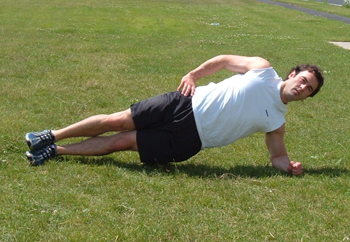
What about the side plank?

I used to think the side plank trained only the obliques (the muscles that run along the side of your abdominals). I didn't realize how much the lats, shoulders, and glutes came into play during this effective exercise. When my clients exhibited poor side plank times - my only expert solution was to just do more side planks! I started to realize that once I increased upper body pulling strength, as well as shoulder stability - side plank times improved dramatically.

Overhead Squat:

Overhead squats are extremely difficult. They require a great deal of mobility in your ankles, hips, shoulders, and thoracic spine. When my client's couldn't go low enough, I looked at all the possible contributing mobility factors. Were their ankles stiff? Were their hips immobile? Take a look at these two guys performing the OH Squat:


I would have originally thought maybe there were some hip flexor tightness, or maybe a restriction at the ankle joint. But now, take a look when they lay down on the floor on their backs:


Without having to support themselves, the mobility issues, for the most part, seem to clear right up. This means that the limiting factor happens to be stability and not mobility. In an upright position, when the body is lowering down into an overhead squat - if there is not enough core stability, the body will literally "shut itself down" as a defense mechanism to halt any sort of perceived danger placed upon it. As a result, I started to work on a lot more more anti-extension exercises such as planks, stability ball rollouts, and tall kneeling chops and lifts to help clear up this dysfunctional movement pattern.


3) Using soreness as an indicator of a good workout: It seems like everyone who goes to the gym uses soreness as an indicator of how effective a workout is. Consequently, many trainers seem to make it their number one priority to make their clients sore. Soreness usually occurs after the muscles experience a different stimulus than it normally does (new exercises, more repetitions, more sets, more time under tension). Beginners tend to get very sore extremely easily because nearly everything they do will "shock" their body. Now, if there's no added benefit to strength, hypertophy, endurance, etc. by being sore, why would I try to make my client feel crippled the next day? To possibly hinder their next workout, or their ability to walk upstairs? I can manipulate workouts to create this effect, but I'd rather focus my attention on getting optimal results. If soreness occurs as a result, then so be it.

4) Emphasizing strength too early in beginners: I used to try to progress my beginner clients way too quickly in an effort to accelerate results. Beginners experience adaptations with 40% of their max load and with only one or two sets of any given exercise. More is less in this situation as it could result in overtraining. However, for intermediate to advanced clients, more sets and higher loads will be needed to yield similar adaptations. According to Dr. Vladimir Zatziorsky in his book Science and Practice of Strength Training, a beginner should wait three years before progressing onto maximal strength work to develop the necessary connective tissue in order to handle the high loads. I think this definitely depends on the person, but I would still wait at least a year before trying to progress into strength-based workouts.


5) If it hurt's, don't do it!: This applies more for myself than my clients. I used to "man up" and work through the pain in my shoulders. I made no gains, and was constantly in pain. Only when I started performing some soft tissue work (with a foam roller and tennis ball), mobility work, improved my scapular stability, and stopped doing exercises that hurt was I able to perform at my best. I switched bench presses with pushupsand floor press, barbell overhead presses for dumbells presses, and did a ton of corrective exercises for my lower traps and serratus anterior. The result was a 70 pound increase in my bench press in four months, and more importantly - healthy shoulders.

Train Hard (and Smart)!

Jason

Thursday, May 14, 2009

Shouldering the Load

Shoulders have always interested me - maybe, because I've tweaked mine on a number of occasions playing various sports, or because of my poor lifting technique when I was younger, and having more than a handful of clients nursing shoulder issues. In this post, I'm going to outline some key aspects to train for or maintain healthy shoulders.

"Impingement" is a term you hear pretty often in the weight room. When people refer to their shoulder, they are most likely referring to their Gleno-humeral joint. It's where the head of the humerus (upper arm) meets the Glenoid Fossa:


The GH joint is a ball and socket joint, which means it has a capacity to move in large ranges of motion. This would be the opposite of a "hinge joint" such as the knee, which for the most part moves in one plane of motion, with some slight internal and external range of motion capabilities. If you take a look at the picture above, there is a beak shaped structure to the left of the glenoid fossa called the acromion process. Unlike the picture depicts, there is actually an extremely small amount of space between the head of the humerus and the acromion process. In order to raise your arms overhead, the rotator cuff muscles must first depress the head of the humerus to clear some space out to avoid "pinching" of the ligaments and tendons in between the head of the humerus and the acromion. If the rotator cuff isn't strong enough to do so, or there is a lack of stability in your scapulo-thoracic joint (because of poor posture, lack of proper programming in workouts, poor exercise selection, etc.), impingement occurs. There are three types of acromions:

You'll notice that type 1 has more or less a flat surface, type 2 is slightly curved, and type 3 has a pretty sharp hook to it. From this, one can surmise that the type three acromion shortens the space between the head of the humerus the most because of its "beak-like" structure, and therefore, can increase the likelihood of impingement syndrome. Your acromion can actually "morph" from a type 1 or 2 into a type 3. This change can occur from poor posture and a poor training program, which I'll go over in more detail later on. I'm more of a believer of contraindicated people, rather than contraindicated exercises; however, the majority of people I see at the gym tend to have poor posture, as well as poor training programs. This is why I included upright rows, and bench dips as "contraindicated exercises" in my first post.

Unfortunately, I can't change the shape of your acromion. But in this post, I'll show you how to improve your posture, strengthen your scapular stabilizers, and provide proper balance in your workouts.

1) Thoracic Spine Mobility. I explained in my last couple of posts how an immobile T-Spine leads to a more mobile lumbar spine, which is exactly what we do not want. Along those same lines, an immobile T-spine will lead to a more mobile scapulo-thoracic joint (ST). In my post A Joint-by-Joint Approach to Training, I went over that we want a stable ST joint, and a mobile GH joint. Our scapulae (shoulder blades) can tilt anteriorly and posteriorly. When we raise our arms overhead, our scapulae should tilt posteriorly to allow the movement to occur. But, let's say our t-spine isn't mobile enough for it to tilt properly:

Round your shoulders forward and poke your chin out like this desk jockey above. Now, in that same position, try to raise your arms up overhead. Your body will not allow it. This will kind of give you an idea of how a person with poor t-spine mobility will lead to poor scapular stability as well as shoulder mobility. My last post shows you some videos on how to improve mobility in your upper back.

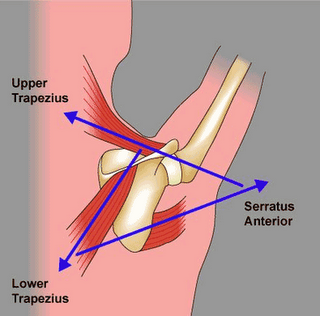
2) Scapular Stability. The average gym-goer will not know what the heck a serratus anterior or where their lower trapezius is located. These two muscles perform a crucial role in stabilizing the scapula when raising your arms overhead. Individually, the serratus anterior protracts (pushes forward) the scapula, the lower trapezius depresses the scapula, and the the upper trapezius elevates the scapula. Collectively, they make up the "force couple" to help rotate the scapula to move the arms overhead:

Most people have very overactive upper traps and an underactive serratus anterior and lower trap. So how do we activate and strengthen these two neglected muscles?

Serratus Anterior: Hand Switches

Keep your core tight - you do not want your hips to sag. Just walk with your hands back and forth. Do 3 sets of 30 seconds each. Going as quickly as you can while maintaining proper form.

Lower traps: Wall Slides

Make sure you squeeze your shoulder blades together, keep your butt on the wall, and keep your shoulder blades down. When your elbows reach the bottom position, try to squeeze both elbows down and towards each other. If you do it right, you should feel it in the middle of your back. Do 3 sets of 12 reps.

3) Pull more than you push!
We need to strengthen our back muscles in order to maintain optimal postural alignment. If you go to the gym and do only pushups and bench presses, you're only reinforcing poor posture and effectively shortening your internal rotators so that you look like the desk jockey I showed you above. The cable row machine is one of the few machines I actually like. It's very hard to train the scapular retractors without cheating or compromising your lower back. We've all seen these meatheads at the gym:

The cable row allows you to stay upright and use an appreciable load, while maintaining good form.


Rotator cuff exercises are extremely overrated. Truth of the matter is, if you lack t-spine mobility, extra 'cuff work will be of little or no use to you. If you have the first three components of a balanced training program in check, then some external rotations will definitely help out, but don't think it is the cornerstone of your workout.


Train Hard,

Jason

Wednesday, May 6, 2009

Thoracic Spine Mobility

Hey all, quick post today:

I've been talking about thoracic mobility pretty extensively lately. Like I mentioned in my Low Back Pain post, the lumbar spine has approximately 13 degrees of range of motion (ROM). The thoracic spine; however, has almost 70 degrees of ROM. The t-spine has a much larger capacity to rotate, yet people still focus on twisting through the lumbar spine. So, how do we increase ROM at the t-spine?

First off we need to loosen up the musculature (Rhomboids, traps, etc.)around it with the use of a foam roller, medicine ball, etc.:


Make sure you cross your arms together to get the shoulder blades out of the way, and make sure not to roll on the lower back.

Next we can perform quadruped (four point stance) extension-rotations:


Keep your core tight, reach your elbow down to the opposite knee, and then extend as far as you can up towards the ceiling. You should feel this near your shoulder blades, and NOT the lower back. Keeping your abs braced will ensure that you get the mobility from your upper back and not the lower back.

I did not take these videos - I got them from the user NutrexSolutions through youtube. I hope there are no copyright infringement issues!

Train Hard,

Jason

Tuesday, May 5, 2009

Superman

Here's an excerpt from Ultimate Back Fitness and Performance:

"Training the back extensors is a challenge if the goal is to minimize spine load. For example, the "superman" is a commonly prescribed spine extensor muscle exercise that involves lying prone while extending the arms and legs. This results in about 6000N (about 1300 pounds) of compression to a hyperextended spine, loading the facet joints and crushing the interspinous ligament. This is not a cleverly designed exercise for anyone." (McGill, p. 227-8)

The National Insitute for Occupational Safety and Health set the action limit for lower back compression at 3300 N. Compression levels past this point has been correlated to a higher risk for injury to the lumbar spine. Incidentally, a straight leg sit up generates about 3500 N, while a bent-leg sit up created about 3350 N. Now, think about all the sit ups you see performed on a daily basis at a gym? Want abs? Strength Coach Mike Boyle often says to perform table push-aways - the best ab exercise he prescribes to his clients and athletes. Obviously this is a joke, but proper nutrition is the key to fat loss - you cannot out-train a poor diet.

So how do we strengthen the back extensors in a safer way? Stuart Mcgill recommends the bird-dog. It's an advanced exercise, and loses its effectiveness dramatically when performed incorrectly. I like to start clients off with the half bird dog:

The key is to be able to extend at the hip, while maintaining a neutral spine. Brace the abdominals, and contract (squeeze) the glute of the raised leg while keeping your chin tucked. Once mastery of this exercise is achieved, progression to the full bird dog can occur:
Here, the stability is reduced to two points of contact on the floor. The opposite arm is raised, and all the same cues apply (neutral spine, abs braced, glute of the raised leg contracted, and no movement occuring anywhere else). Its important that the spine remains neutral throughout. Too often, people overarch the lower back at the top of the movement, while also rounding over at the bottom of the movement. Do not try to touch your elbow and knee together at the bottom, but instead just let them hover slightly off the floor and then raise them back up again. According to McGill, the half bird dog imposes less than 2500 N to the spine, while the full bird dog creates about 3000 N. Both are under the acceptable limit set by the NIOSH, and also with a neutral spine unlike the superman and situp where the low back is taken through full extension and flexion, respectively. Couple that with glute activation, as well as an anti-rotary component, you get a lot of bang for your buck value, with minimal risk of injury to the lumbar spine.

Train Hard (and smart!),

Jason